October 28, 2026
Made to Last: Jaime Fergusson of GUS Adventure Wear
From climbing pants that didn’t fit to designing her own, Blue Mountains maker Jaime Fergusson is bringing a practical, thoughtful approach to outdoor clothing, and the skills behind making it.
Jaime Fergusson’s journey into clothing design began with a frustration: she couldn’t find a pair of outdoor pants that fitted properly.
Living in Tasmania during the pandemic, Jaime was becoming immersed in climbing, spending long days outdoors and discovering a world of adventure. She loved climbing gear, but the pants available to her fell short.
“The cut was wrong, the colours drab, the pockets small,” she recalls. “I remember thinking, huh, maybe I should fill that gap!”
There was one catch: Jaime didn’t know how to sew. A few years later, after learning the basics, that idea began to take shape as GUS Adventure Wear.
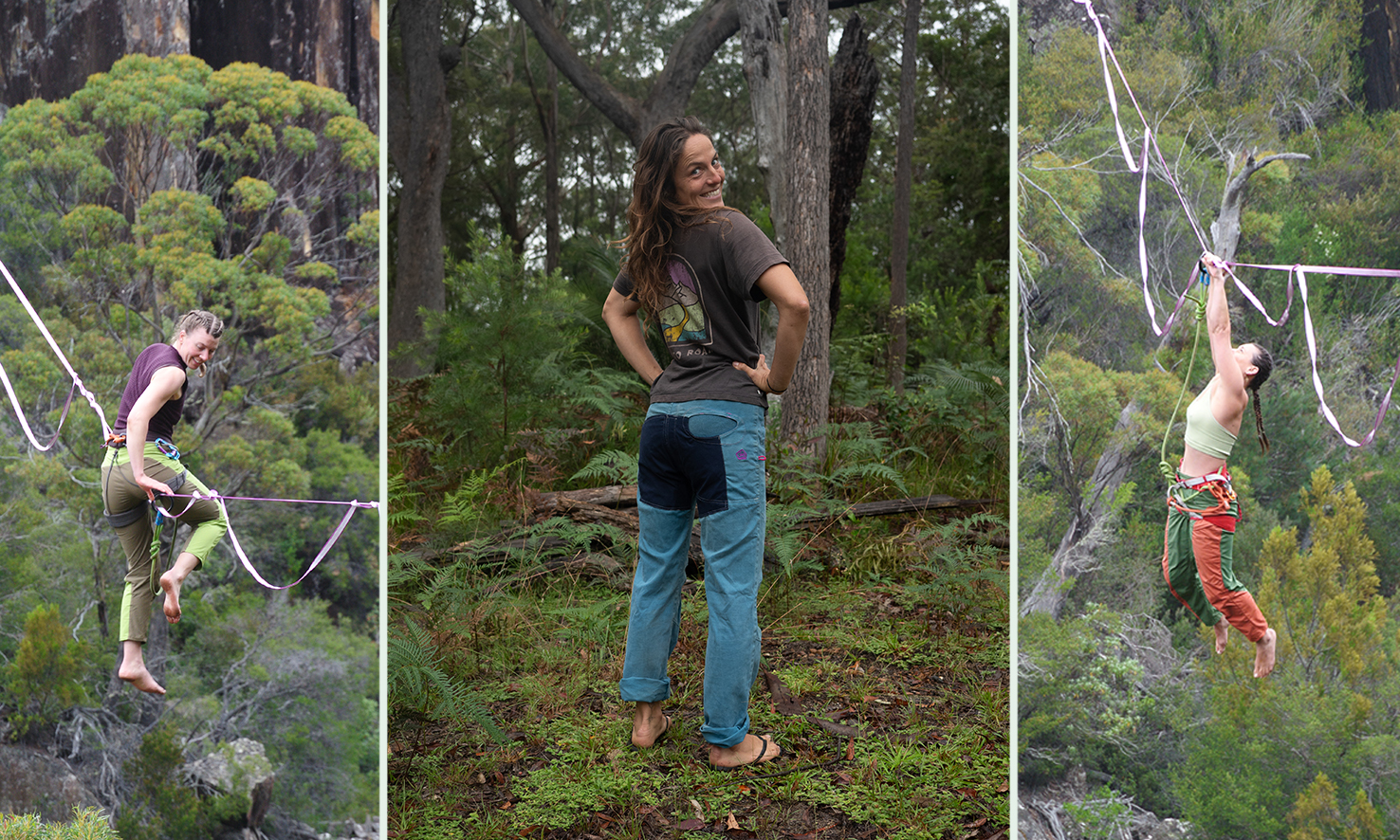
GUS is built around clothing that works for real bodies and real movement. For Jaime, finding women's pants that fitted comfortably through the hips and thighs, stayed up at the waist and had genuinely useful pockets was a constant challenge. She wanted to create something functional, durable and a little more playful.
Learning to make things well
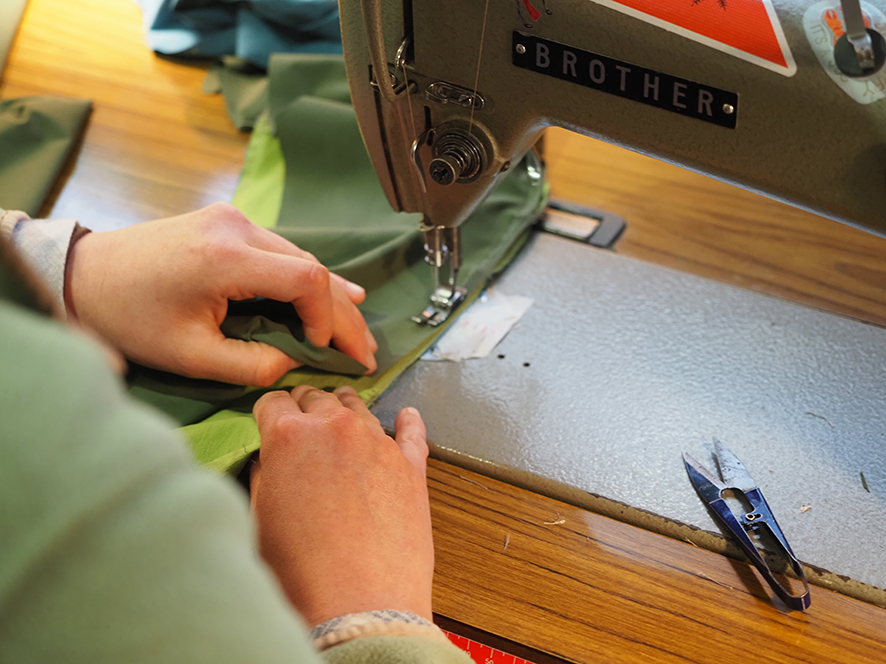
Today, Jaime moves between designing GUS garments, repairing clothing through Sew and Sew, and production sewing at Summit Gear/Whippa's small local factory.
Each gives her a different understanding of how clothing is made and what makes it last. At Summit Gear/Whippa, where she sews backpacks and carries out quality-control checks, she's developed her technical skills and gained a deeper appreciation for the time it takes to master a product.
Repair work offers another perspective. By examining where garments wear out and how they're constructed, Jaime can apply those lessons to her own designs, reinforcing seams, improving pockets and considering how a garment might be repaired in the future.
“I wanted to eliminate a seam on the hips but realised that it would make altering it later if wanted impossible,” she says. “So, I picked longevity and function over style.”
It's a reminder that thoughtful design considers more than how something looks when it's new.
“If you love wearing it, you will keep it in circulation. You may love them so much that you repair them when they break."
The value of making locally
Jaime was one of the skilled local makers who helped turn MTNS MADE's handmade T-shirt experiment into a finished garment. The project revealed just how much time, skill and labour sit behind an everyday item of clothing.
For Jaime, it reinforced the value of making locally and the importance of understanding what goes into the price of a garment.
Materials are only part of the cost. There is also pattern development, cutting, sewing, expertise and the time required to do the work well. When clothing is expected to be cheap and fast, much of that human effort disappears from view.
Supporting local makers helps sustain livelihoods, maintain skills and keep work within our communities. It also asks us to reconsider how we value the things we wear.
Making a life, as well as a living
Alongside developing GUS, Jaime balances production work and repairs with climbing, time outdoors and the rest of life. She's conscious that sustainability must include the maker, too.
“I am trying to reframe grinding culture for myself, I don’t want to grind. I want to enjoy my life as much as possible,” she says.
It's an ongoing balancing act, but one that sits at the heart of a more considered approach to making: valuing time, allowing skills to develop and recognising the person behind the product.
Through GUS, Sew and Sew and her work in local manufacturing, Jaime connects the different stages of a garment's life, from making and wearing to repairing and keeping it in use.
Her story reminds us that made to last is about more than durable clothing. It's also about valuing the skills, time and people that make it possible.
@gus_adventurewear | @sewandsew_bluemnts