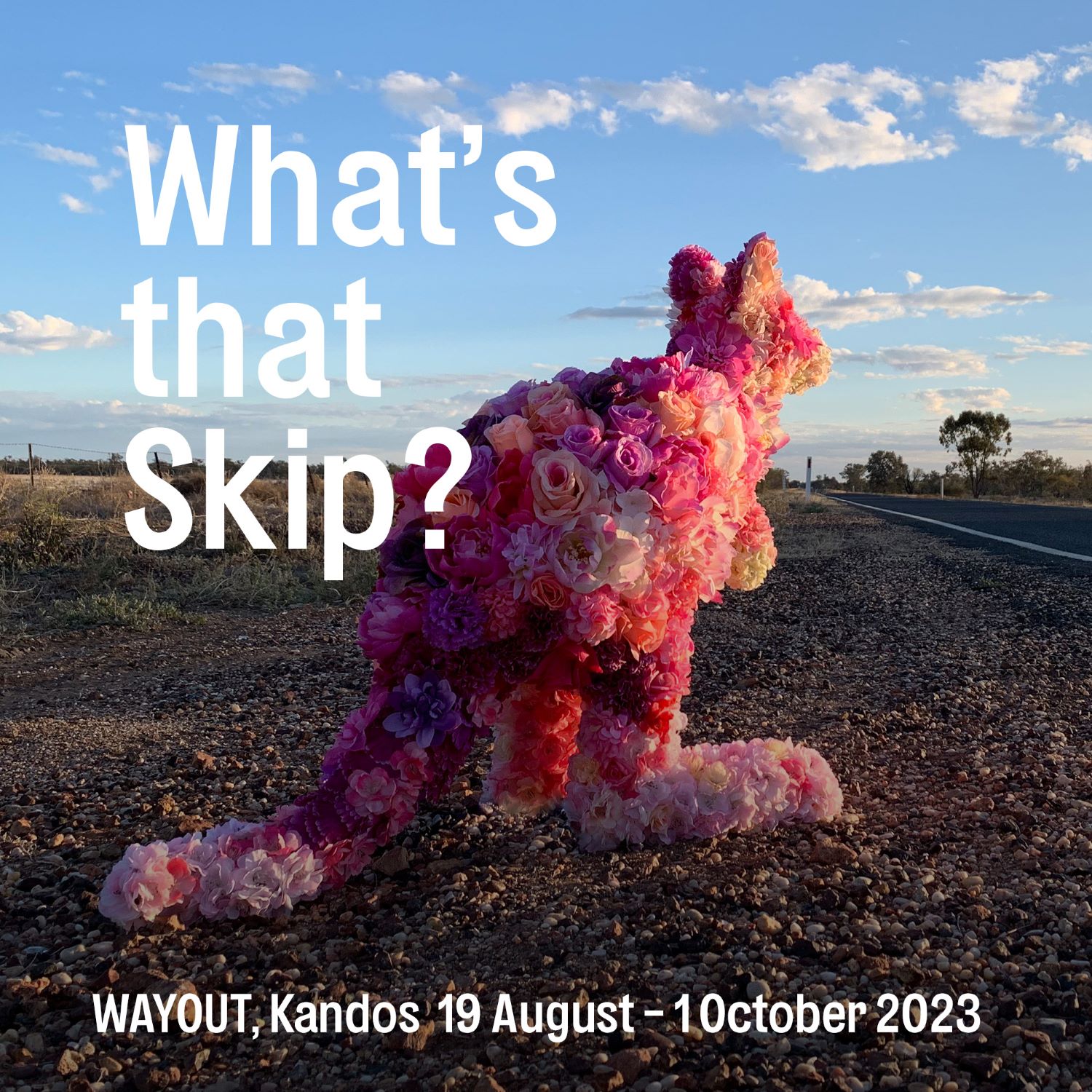
"What's that Skip?"
project description
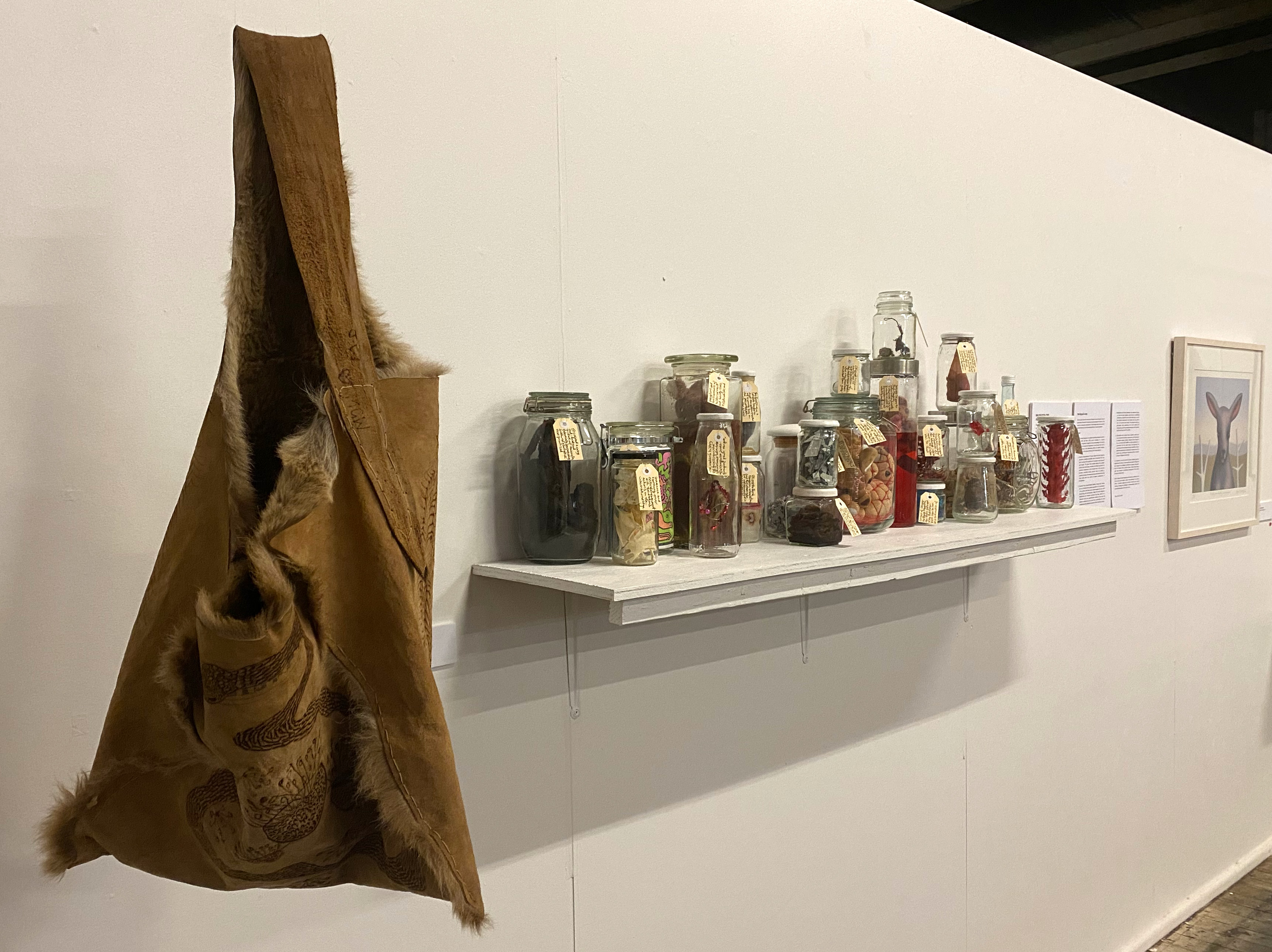
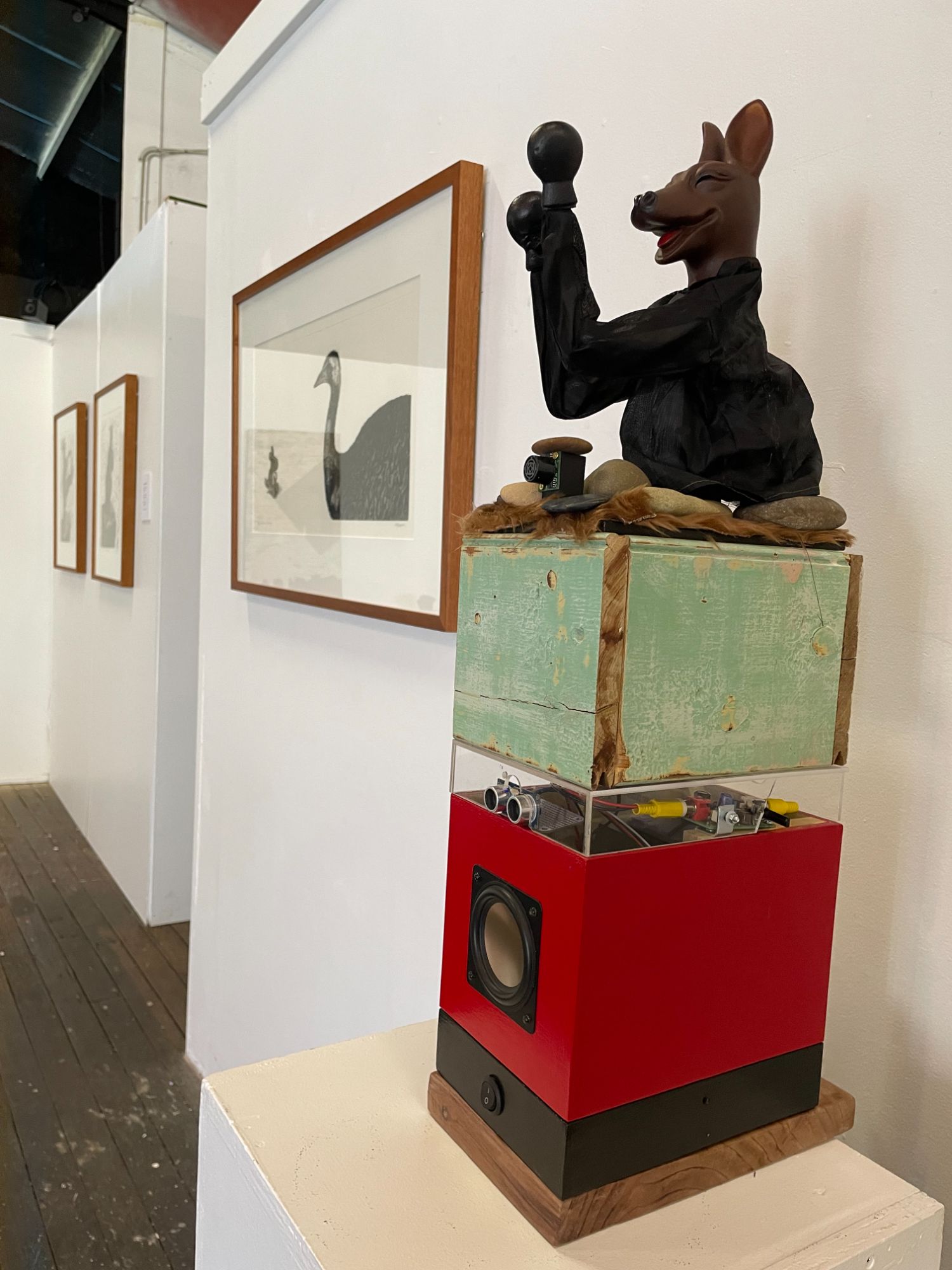
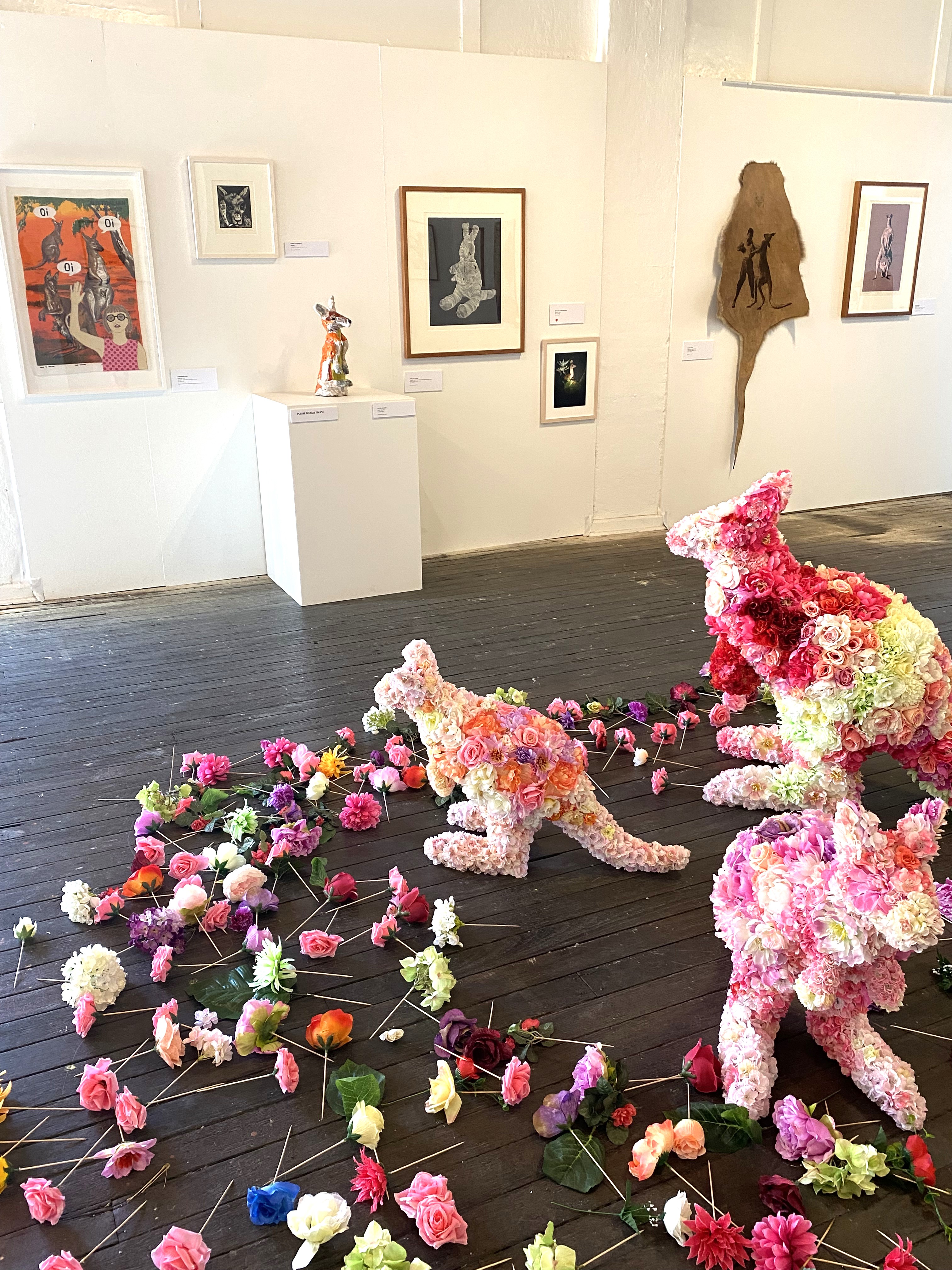
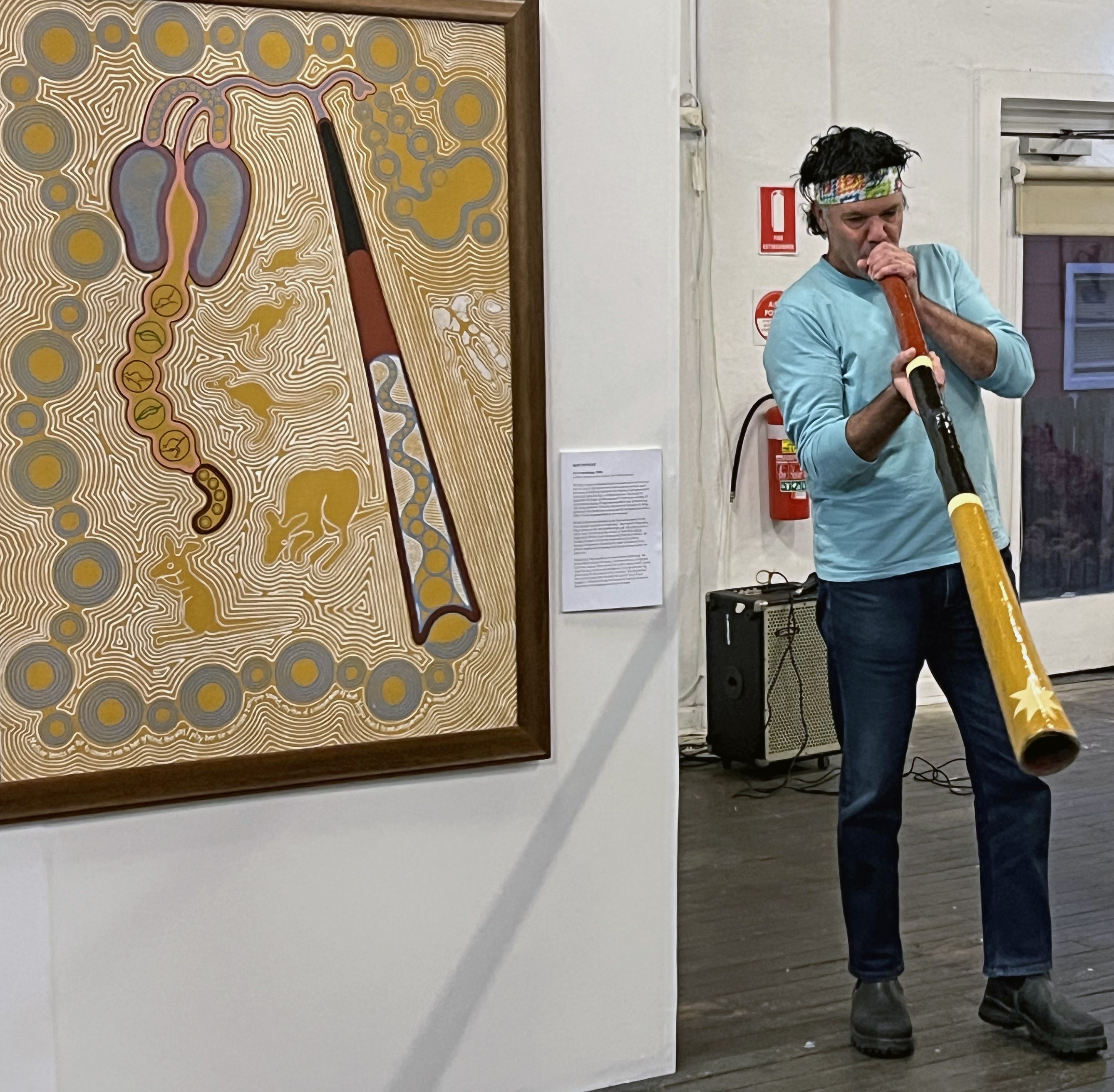
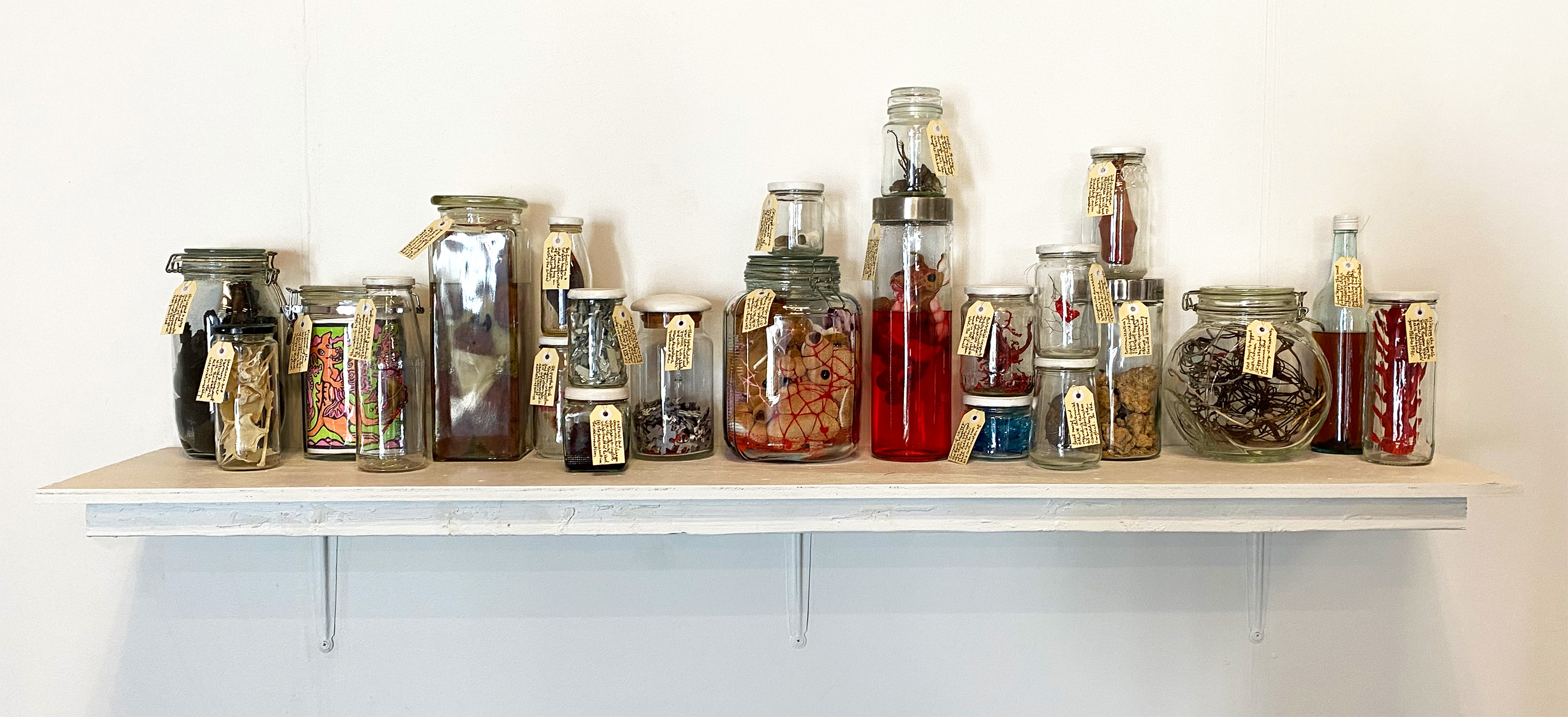
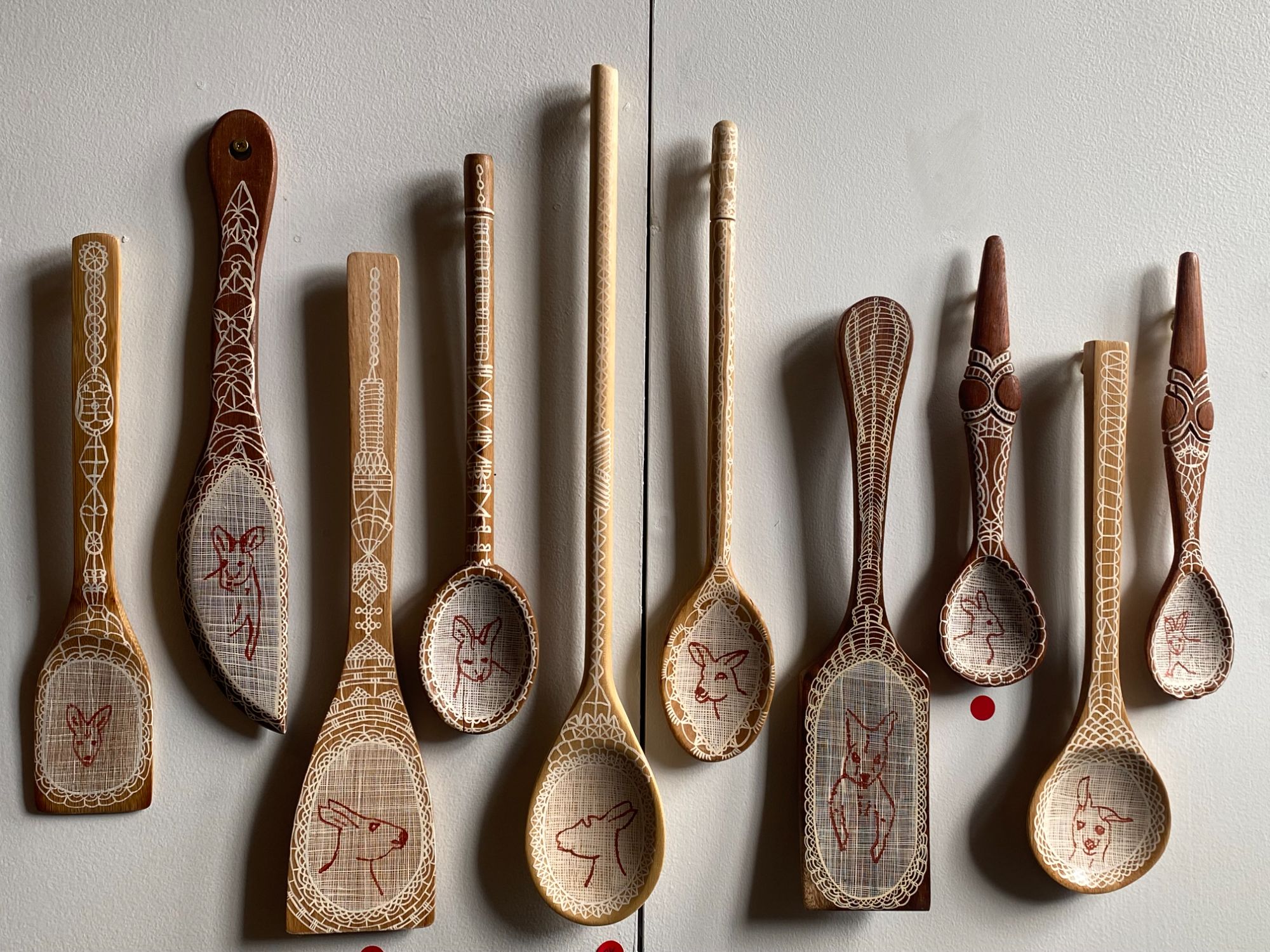
An exhibition at WayOUT Kandos on the kangaroo in contemporary art.
Our love and cultural acceptance of the Kangaroo starts for many via the 1960s Australian TV series ‘Skippy The Bush Kangaroo’. The city was rarely mentioned it was all about the bush, its light, the flora and fauna. Skippy helped translate the Australian bush to national and international audiences. Millions in fact. Back then Kangaroos were considered only as pests (by most white Australians) Skippy made people think twice about native animals and our natural environment. Exhibiting artist Mai Nguyen-Long also noted that the show was a happy distraction for TV audiences during the Vietnam War.
It is also considered one of the earliest TV shows portraying positive relationships with Aboriginal people. The TV show continues today repeated on screens in Australia and across the world. Seeing a Kangaroo (ie “Skippy”) remains one of the first and most requested “must dos” by international visitors. The exhibition curators take the project’s name from a line in the show. Skippy the Bush Kangaroo is entrenched into the DNA of many.
Permission was sought from Fauna Productions and the National Film and Sound Archives to show mash-up video footage from the original TV series. This unique (and extremely popular) addition to the exhibition amplified its pop culture appeal and it is an area the curators are exploring by developing audio content via a podcast / radio content that will further enhance exhibition content and audience participation.
The Artists
We worked directly with local artists (Jason Wing, Maddison Gibbs, Blak Douglas and Fleur MacDonald) and regional artists (June Golland, Ian Milliss, Peter Cooley, Simon Reece, Damian Castaldi and Solange Kershaw, Craig Handley, Patti Abela, Brad Allen-Waters, Adrienne Doig and Mai Nguyen-Long).
Additional key pieces were sourced directly from Joan Ross and printmaker Michael Kempson and several works on paper, (specially printed for this show), were given by Chris O’Doherty (aka Reg Mombassa).
Further important statement works by Fiona Hall, Reko Rennie, Gordon Hookey, Roger Law, Noel McKenna and Adeel uz Zafar completed the line-up.
The selected artworks have significance in their own right but being grouped together enhanced their emotional value and power of storytelling. And the Kangaroo tells many stories.
Co-curated Miriam Williamson and Leah Haynes
project gallery
project video
project categories
No items found.